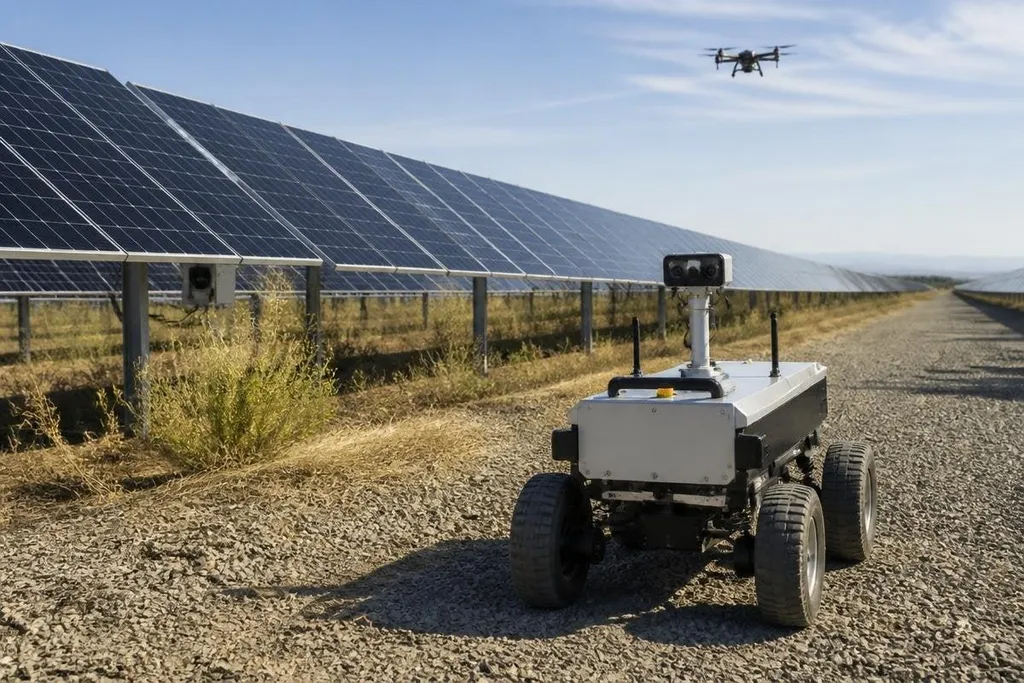
Solar farms cover large areas with rows of panels that need regular checks, cleaning, and repair. Robots can take on parts of that work by moving along panel rows, carrying cameras, or flying over the site to find faults before a technician visits.
- Ground robots can inspect panel surfaces and carry cleaning tools.
- Drones can scan large sections without sending people across the site.
- Human technicians still handle repairs, safety checks, and difficult access points.
Where robots fit first
The clearest use is inspection. A ground robot can travel beside or across panel rows with RGB cameras that record visible damage, missing parts, dirt, and plant growth. Software can then sort the images for a technician to review.
Thermal cameras add another view. A panel with a hot section may have an electrical fault, a damaged cell, or a poor connection. The image does not fix the problem, but it can help a technician decide which panel to check first.
Drones work from above. They can scan wide areas without moving over uneven ground, though the results depend on flight rules, wind, lighting, and the quality of the camera data. A drone can show where a fault may be; a person still needs to confirm what caused it.
Cleaning and vegetation control
Dust, pollen, bird waste, and plant growth can reduce the light reaching a panel. Robots built for solar sites can carry brushes, air systems, or water tools along fixed routes. Their value depends on how well they handle panel gaps, row changes, slopes, and the site’s cleaning rules.
Water use matters in dry regions. A cleaning robot that uses dry brushes may reduce truck visits and water demand, but the brush design must avoid scratching the panel surface. A damaged coating can create a repair cost that outweighs the cleaning benefit.
Vegetation creates a different task. Mowers and small ground robots can work under or beside panels, where tall grass can block access and increase fire risk. They need obstacle detection so they can avoid cables, support posts, fencing, and workers.
What the machines cannot do alone
Solar sites are varied work areas. Rows may sit on slopes, the ground may become soft after rain, and panels may have different heights or layouts. A robot that works on one site may need new maps, route settings, or safety limits at another.
Weather also changes the job. Wind can limit drone flights. Heat can affect batteries and electronics. Rain can reduce image quality and make ground travel harder. These limits turn a robot purchase into a site-planning decision, not a simple equipment swap.
Maintenance teams also need a clear handoff. The robot should record where it found a possible fault, which sensor found it, and when the scan took place. Without that record, a technician may spend time repeating the inspection instead of repairing the panel.
A fault record matters beyond the panel it names. For a wider view, solar farm robotics reporting from Robot24.com connects this maintenance work with other field robots and the tasks they run. That comparison leads into autonomous systems working outdoors.
That coverage places solar maintenance robots beside the wider move toward field-based autonomous systems.
The cost question
A robot can reduce walking, driving, and manual inspection time, but those savings only count if the machine runs often enough to justify its purchase and upkeep. The calculation also includes software, batteries, spare parts, training, insurance, and the time needed to review its reports.
I'd start with one repeated task, such as thermal inspection or panel cleaning, and measure the result across a real section of the site. A pilot should compare robot reports with technician checks, record missed faults, and count the time needed to prepare each job.
A useful decision guide looks like this:
- Map the site first: record row spacing, slopes, access roads, panel types, and areas with weak mobile coverage.
- Pick one task: begin with inspection, cleaning, or vegetation work instead of asking one robot to handle every job.
- Set a human check: require a technician to confirm faults before repair work starts.
- Track false alarms: count reports that lead to no repair, since review time can erase labor savings.
- Plan for recovery: decide who retrieves the robot after a stalled motor, blocked route, or lost connection.
- Review the full cost: include service contracts, replacement parts, staff time, and site changes.
The strongest case for robots comes from repeated work across large, predictable areas. Solar farm owners should test that fit on one section first, then expand only when the machine finds real faults, cuts manual work, or cleans panels without adding repair risk.